
Choose the picture cues
Add picture cues for the routine you want to show.
A hands-on visual routine board for preschools, schools, support centres and families.
Where Flipzy fits
How Flipzy works
A physical routine children can follow without reading or using a screen.
Add picture cues for the routine you want to show.
Children can see the sequence and what comes next.
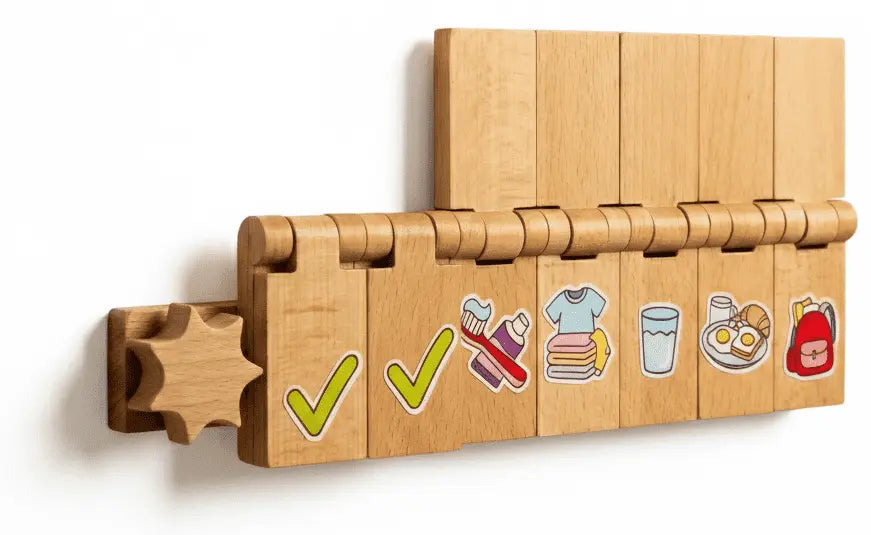
Each closed tile reveals a green checkmark, making progress visible.
One board. Many routines.
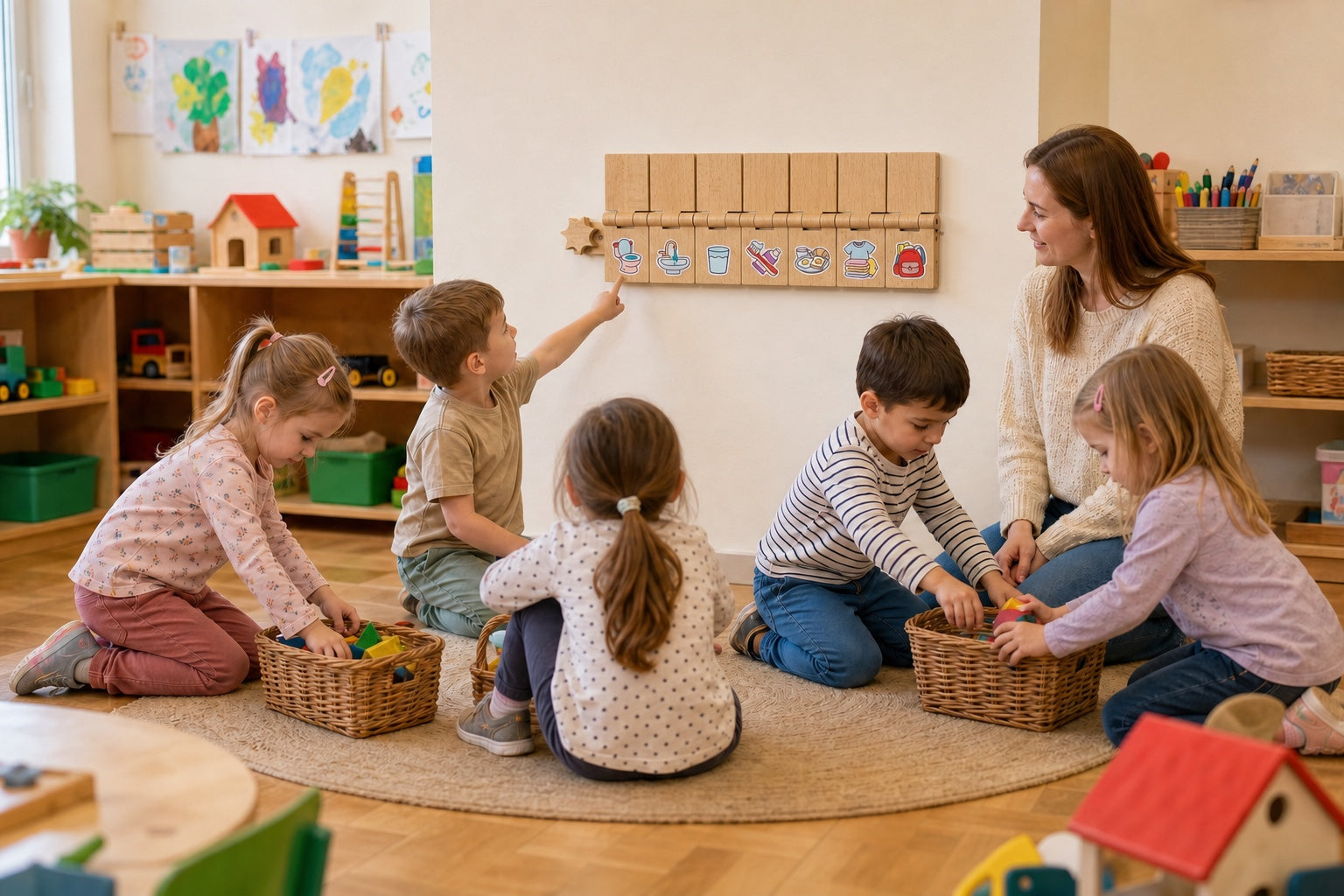
Set one routine for a whole group, a small group or one child. Rearrange the tiles whenever plans change.

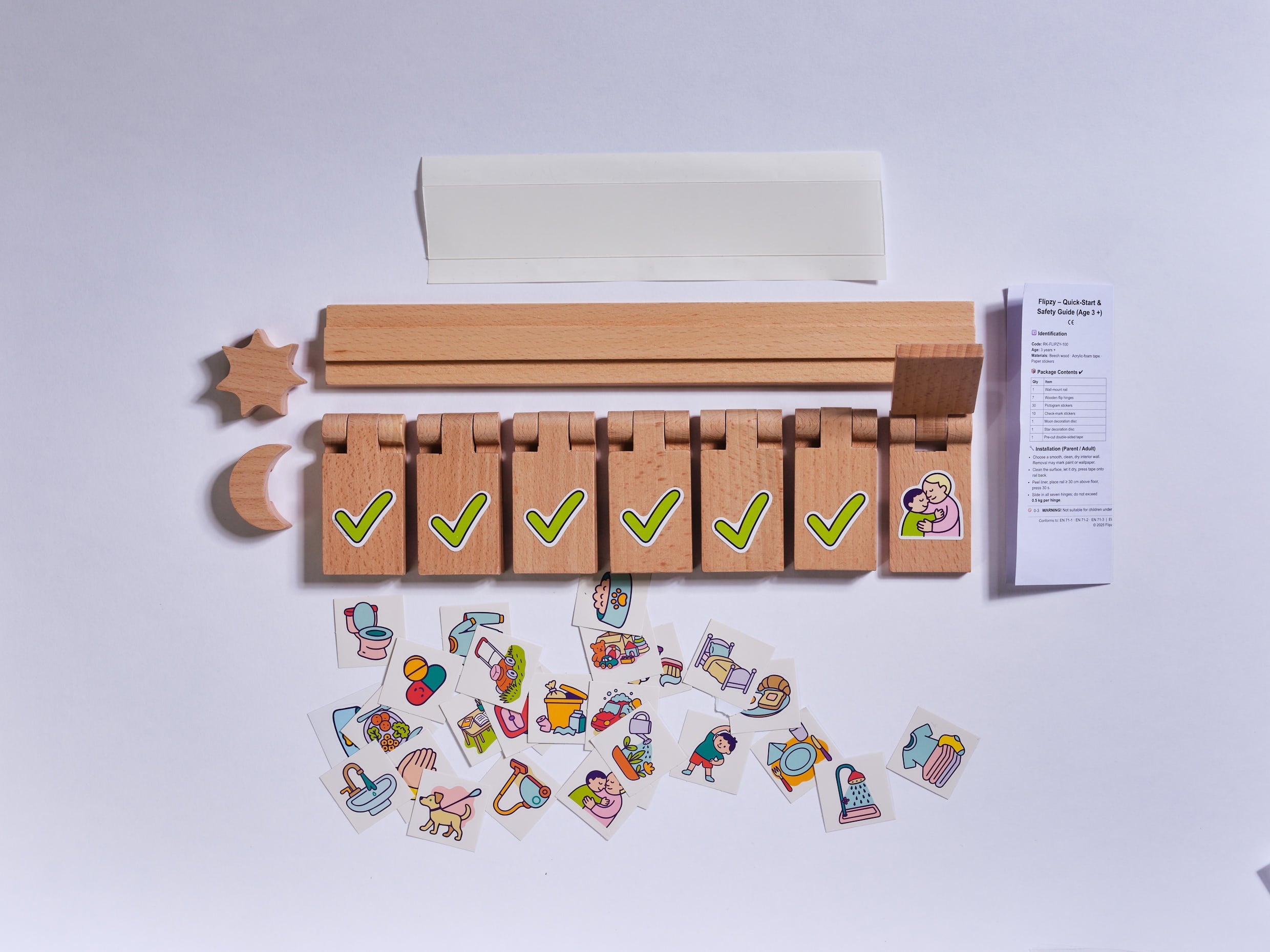
Less repeating. More showing.
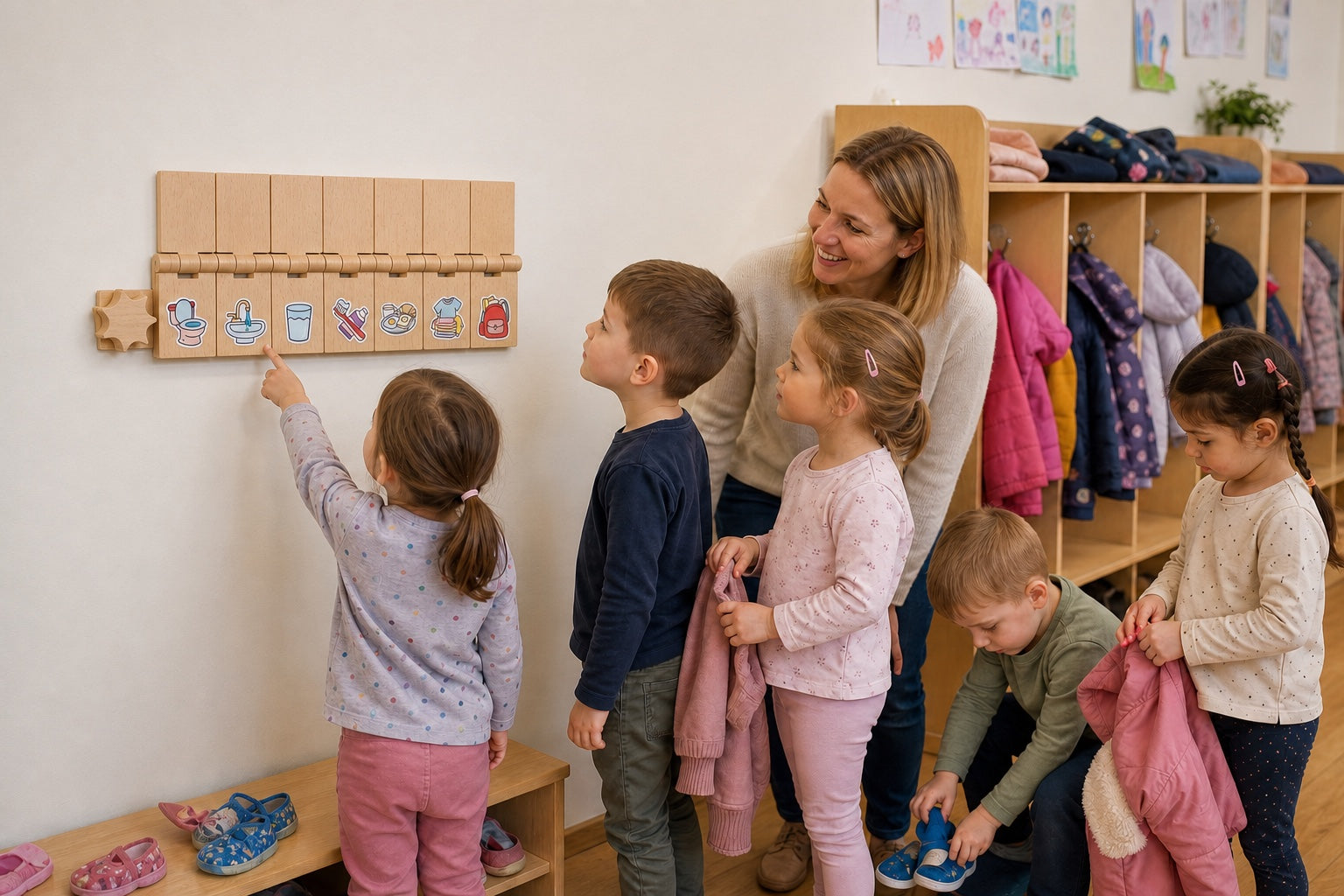
Show children what is happening now and what comes next.
Point to one clear visual cue alongside your usual support.
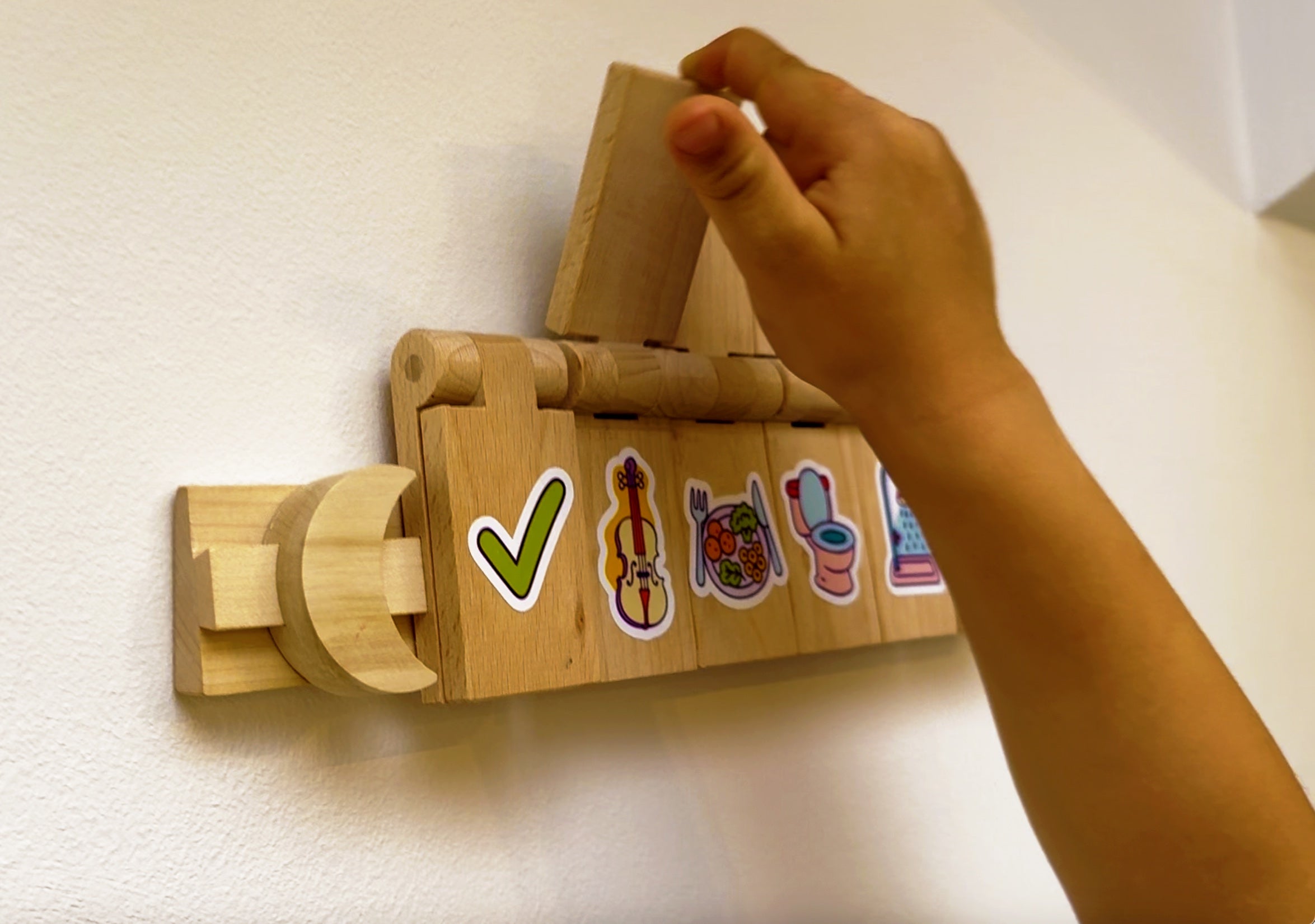
Every closed tile gives a clear, satisfying sign of completion.
Children can begin checking the routine and taking the next step themselves.
One routine. Clear at a glance.
Keep Flipzy where children can see and reach it, then use it as a calm visual cue alongside your usual support.
Get your Flipzy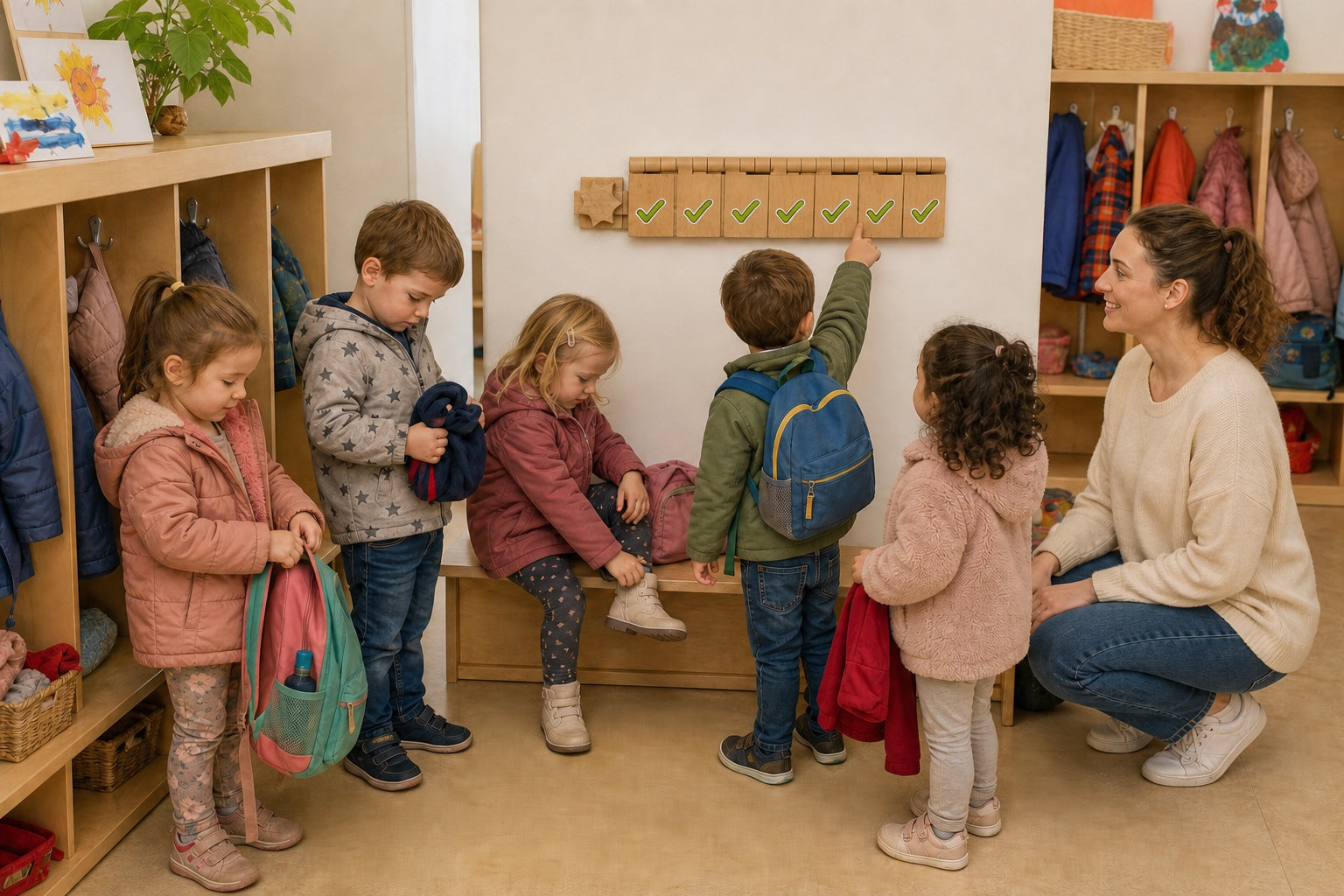
Build a routine, then rearrange the tiles whenever the day changes.


One complete Flipzy set
Yes. Place it where children can see it and use it for shared moments such as arrival, activity changes, self-care, meals, outdoor time and getting ready to leave. Flipzy can also support a small group or one child.
An open tile shows a picture cue for a task that is still to do. When the task is complete, close that same tile so its green checkmark becomes visible. Each board has seven tiles.
Yes. Rearrange the wooden tiles whenever plans change. Use the included picture stickers to create routines for different parts of the day.
Its visual, tactile format can complement existing support for children who benefit from clear visual sequences. Every child is different; Flipzy is a supportive routine tool, not a medical or therapeutic device.
Yes. Choose the quantity you need above. For a larger order, formal quote or invoice details, email info@flipzy.toys.
Flipzy is designed primarily for children aged 3–8. It can be used in kindergartens, schools, support centres, therapy settings and at home. Older children who benefit from a clear visual sequence may also find it useful.


